How to earn extra pennies on the side and make them count too

Authored by Cathrine

Many a time people have a lot of dead time in between important work. They end up spending endless hours just scrolling through social media, to no benefit. I have found that using that extra unclaimed time to earn pennies is actually a very good venture. Coupled with investing the few pennies to get compound interest, you would be very surprised how much you will have accumulated over a full year. There is a number of very straightforward and uncomplicated ways to make extra dollars if you are a 9-5 kind of worker. Most of them you can do from the comfort of your couch even as you entertain your family too. Here are some few ways i have made some coins after my 9-5 job.

1. Do surveys. I used to hear a lot on social media about how surveys can pay small money if you sign up and take them. For a long time I hesitated, for no good reason other than just being sceptical, but once I took the dive I have not gone back. There are a few survey sites that pay good money, like Attapoll, Octopus, Toluna, just to mention a few. These sites have surveys of different lengths, ranging form a minute to 30 minutes, which you can choose to do depending on the amount of free time you have at any given moment. The key takeaway points I have for this hustle is not to attempt to open several accounts on the same site as this may lead to you being banned from the site, sometimes permanently. Some sites like Attapoll will award you cash at the end of each survey, which you can cash out using different platforms like Paypal or several other cashout options. Other sites like Toluna will award you points after every survey, which you can redeem after reaching a certain threshold amount using gift cards and also Paypal.

2. Another online earning potential is testing game apps online. Some companies require you to download games and play until you reach a certain level then get rewarded. Apps like Clickworker, Multipolls, and others, allow you to earn small money through testing game applications. Download the games and give the phone to your children to play the games during the times you are busy with something.

Boy showing his mother results of his game

This will help you reach the level you need for compensation faster. Chances are your children love to play online games and they are always going to use the internet anyway so use that to your advantage and it is a win-win situation.

3. Aside from doing surveys and testing game apps, another earning opportunity lies in training AI. There are several sites which you can sign up with and help train AI through carrying out certain tasks. I have personally worked on some Appen projects, specifically the Whatcom projects, and I have made some good pennies testing their new applications. When you join such projects, make sure to be on the lookout for what time the projects are normally uploaded.

Personal Daily Planner

Align your schedule with that timeline in mind to maximize the amount of tasks you work on in order to earn high amounts each day.

4. Use every available small break you get, even as short as 10 minutes to earn as much as you can. I have started giving myself target for each day, say to earn at least $7 from such small ventures. By the end of a 5-day week I will have more than $35 from surveys only. So many opportunities are present for you to do these little jobs. I used to think I did not have enough spare time until I started working on these little jobs. That is when I realized how much dead time I had on my hands. Use the time when others are just talking at work to listen to them and do surveys at the same time.

Woman works on her tablet as she watches her kids at the park

Work even at the park as you watch your child play. Choose to stay in the car at the mall when your partner wants to do some shopping for themselves and allow them to shop in peace as you earn your pennies in the car park. When everyone else at home is on their mobile binge-watching content on social media, be on your phone earning money.

Now that you have earned your pennies on the side, how best do you make them count? Simple. Invest all the money you get from your little side hustles. Buy EFTs or open a high yield savings account. Investing the money gives you a sense of achievement as you see your balance gradually grow. Remember to not mix you side hustle money with your income from your main job. Keep them separate so you can watch your few pennies grow into a good balance. It serves as motivation to keep going when you see the investment balance slowly but steadily grow. To date I have managed to invest $567 and I only started slightly more than 3 months ago.

While at it, set regular automated investment instalments to push you to achieve your targets. I cannot tell you where to invest but I use CommSec Pocket Investments, which is a subsidiary of my main banking institution. There are countless other investment platforms, like Moomoo, among others.

Investment trends

Whatever you do, make the pennies count by making them do work for you in your sleep through investments. And no matter how bumpy the market landscape becomes, ALWAYS be investing. You will thank yourself later.

Please share your own ways of making money on the side so we can all learn and earn some more.

If you were interested in this post and would like to be notified when I write more posts, just type YES in the comment box.

Remember to leave a comment and like the post. Till next time, keep earning your extra pennies…

7 Proven Ways To Motivate Your Child To Study

Authored by Cathrine

Having a child who knows the value of education is by far one of the greatest gifts a parent could ever wish for. In today’s world where many electronic devices battle for children’s attention, it is normal for scholars to develop an aversion for books. However, reading books and studying meaningfully are skills that your child can still exercise if you play your cards right. With the right kind of strategies you could well have your child dedicating a healthy amount of time to their studies.

Here are a few strategies that I have used with my child, and which I believe that if my own parents had used with me growing up, I could have achieved even better academically.

  1. Be a lifelong learner yourself.
Woman studying in her home

Children learn a lot from us through a ‘hidden curriculum’. This means they are likely to copy what we do than listen to what we say. Make time to study in the view of your child. This conveys a message of being ‘in it together’ because that way they know you understand that studying is not fun but you too are still doing it. Model the studying habits that you would want them to also use, for example jotting down notes or putting away all the distractions like mobile phones.

2. Schedule study sessions to align your study time with theirs.

A woman studies with her daughter at a kitchen table

On the back of the above strategy of being a lifelong learner, try to set time for both of you to be studying at the same time. The feeling of study companionship can be very beneficial to children and may result in improved motivation to study. If both of you go quiet and focus on your individual studies, your child is likely to also get into the study mood and actually put in some work. You only need to make sure that the duration of the study session is matched with your child’s age so as not to overwhelm them.

3. Offer rewards for successful studies.

A woman plays with her child

Children work better if incentives are dangled in their face. This is because their motivation is more extrinsic than intrinsic when they are still young. There are several offers you can make to your child to motivate them to study. Examples include offering to play with them after completing tasks, taking them to the park after successful completion of tasks, or give them some coins to add into their piggy bank. Whatever the incentive you give, make sure it is well-deserved. This teaches them hard work gets rewarded.

4. Give immediate feedback for the work done.

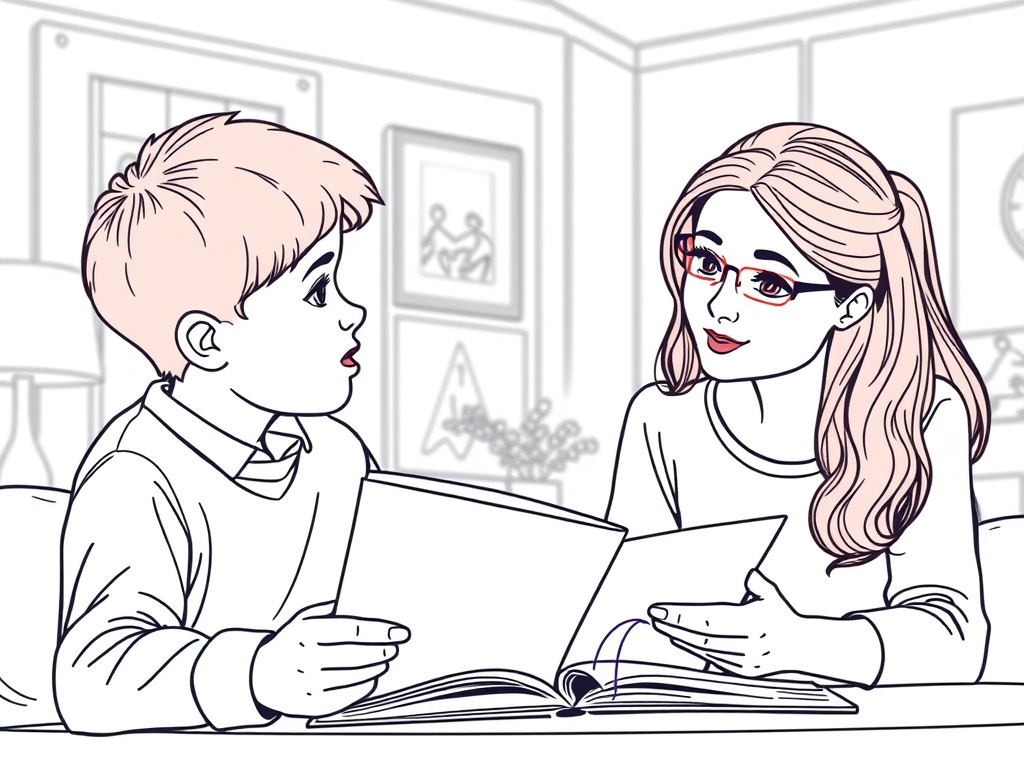
A mother gives feedback to her son after task completion

Another important thing is to give your child instant feedback on the work done. This is because positive feedback drives motivation and that builds momentum for more study sessions. You do not need to be a teacher to assess your child’s work. You can measure the success through simple different assessments you can set yourself at home.

5. Show your success and link that to your hard work.

Mum celebrates her positive course results with her children

Whenever I finish a course and get a certificate I always show it to my child. If I get a side hustle connected to my acquired skills I use that achievement to motivate her to gain skills of their own and make money out of them. This is a very good strategy to use to motivate your child to study because they will know that hard work is rewarding.

6. Set achievable tasks to be finished in a specified time.

Teenage boy works on timed tasks

One of the most important part of motivating your child to study is ensuring that any tasks set are achievable within a set timeframe. If you give your child work that they cannot finish and experience a feeling of accomplishment, you are going at it the wrong way. Your child needs to feel that they are able to finish the set task, and that you are not setting unachievable targets for them. Piling huge amounts of work on them will only discourage your child as they get overwhelmed and are likely to quit without trying.

Download and encourage them to use time-tracking apps to stay focused on studying for set periods of time. Such apps like Pomodoro are helpful and keep them motivated because they will look forward to the breaks when you could award them snacks for staying on task.

7. Create a fun learning environment.

Three boys with science equipment discovering some things for themselves

For young children and even unmotivated high school students, learning might occur faster if the environment is fun and fraught with hands on activities. Search for content that includes a hands-on twist, even at home, to motivate them to study. I have often noticed, being a teacher myself, that even the most reluctant student is willing to participate in hands-on tasks, and they often remember concepts taught in that way more than the wholly-theoretical content.

Those are some of the tips I have for motivating your child to want to study. I know as a parent you definitely have your own additions to make. Please post them in the comment section so can all benefit from them. Like and share the post.

How To Raise Responsible Kids

Authored by Cathrine

It has never been easy to raise responsible children. Even the most naturally-disciplined children need proper guidance to grow into fully responsible adults. In addition to having good manners, raising responsible children entails fostering a sense of self-reliance, empathy, and integrity that will guide them throughout their lives.

A young boy with a book open

Listed below are some key strategies that parents and guardians could use to help their children grow into responsible adults.

  1. Starting early and being consistent

Discipline and a sense of responsibility are likely to be accepted and appreciated if they are instilled in children at a tender age. Children need to know that there are clear and consistent boundaries to be observed.

Photo by Mikhail Nilov on Pexels.com

The consistency helps with predictability which children thrive very much on. I have a 10-year-old daughter who now has an idea of the kind of consequences that each action leads to because I have been very consistent with the expectations and consequences.

2. Employing both retributive and restorative strategies

Children need to understand that their actions may result in negative consequences so that they discourage themselves from repeatedly doing the wrong things. At the same time, you should also take time to have restorative conversations to encourage introspection about their actions and what they mean to the people affected or around them. I make sure to have a chat with my daughter after a particularly bad incident and when emotions have gone down, to discuss the causes, feelings involved, and how such incidents could be avoided in future.

A woman holds a restorative conversation with her teenage daughter

This strategy is a powerful tool for fostering emotional intelligence because it fosters a spirit of unselfishness and encourages them to be responsible for their actions.

3. Cultivating a growth mindset

As children grow, they will always make mistakes even if they mean good, just like we all do. Make sure to encourage children to embrace challenges and view mistakes as learning opportunities. Just be on the lookout that what they call mistakes are real mistakes and not them being sloppy or hideous and hiding behind the ‘mistake’ banner. I have often caught my child trying to lie to me about having ‘forgotten’ to undertake an assigned task when in actual fact she was just trying to avoid the consequences of her negligence.

Emphasize the importance of effort and hard work, rather than solely focusing on the outcome. I cannot count the number of times I have had to praise some very ugly drawings because I appreciated the effort that she had put into it more than the outcome. The praise has always been met with renewed vigor to draw even better pictures and that has helped a lot in the perfecting of my child’s art.

4. Fostering empathy and compassion

Feeling for others is a very important part of being responsible. Teach your child to consider how other people feel in all situations. This is not to say that they should let people trample upon their emotions or anything like that. Rather they should just be emotionally intelligent to feel for others in their times of strife and act in a way that is not selfish towards others. Encourage them to act kindly towards others, involving them in activities such as volunteering, helping family members, or sharing with friends.

Girl sharing food with her friends

You can even go as far as engaging your child in family discussions about current events and social issues to cultivate empathy and understanding. I was surprised to hear my 10-year-old join in our discussion about the USA 2024 presidential elections, and she raised some points that were quite intelligent for her age. That conversation provided me with a window into her inner thoughts and I could tell that her viewpoints were stemming from a point of concern for the general populace. Discussions of such nature will give you an opportunity to see what your child thinks and channel them in the way of compassion, helping you to raise a responsible child. Most importantly, children learn by observing. Demonstrate empathy and compassion in your own interactions with others.

5. Teaching responsibility through chores

Teach your child to help with house chores. Assign age-aligned chores to help children understand the importance of contributing to the household. Part of becoming a responsible adult is being able to work around the house to keep it habitable without losing large sums of money to cleaning agencies every now and then. Maintaining a clean environment may just rub onto their minds and encourage them to keep clean thoughts as well.

Little boy helping with chores in the kitchen

6. Encouraging open communication

Communication is the key to all successful relationships. Teach your child to communicate their thoughts and feelings to you as much as is practically possible. On your part, actively listen to their thoughts, feelings, and concerns. If possible, have regular family meetings to discuss household rules, address concerns, and celebrate accomplishments.

A couple with their 3 children having a conversation

Do as much as you can to create an open and supportive environment where your child feels comfortable expressing themselves honestly. Try as much as possible not to judge otherwise they will clam-up and will not feel safe to open up to you again. Offer your own viewpoints after giving weight to their own emotions and concerns, and help your child navigate any issues in a way that reiterates their full responsibility for the actions they take.

7. Nurturing self-reflection

Self-reflection is very good practice which enables a person to take stock of their inner being. There are many ways through which your child could be taught to introspect. For instance, you could start by encouraging your child to make journal entries to help them reflect on their experiences, emotions, and behaviors. Taking note of their various emotions will help mold them into becoming responsible people as they learn to treat others the way they would want to be treated themselves.

In summary, ensure to play your own role by modelling the behaviors that you would want your child to exhibit. Raising responsible children is an ongoing process which requires patience, understanding, and a consistent effort. By focusing on these key strategies, you can help your children develop the essential life skills they need to thrive.